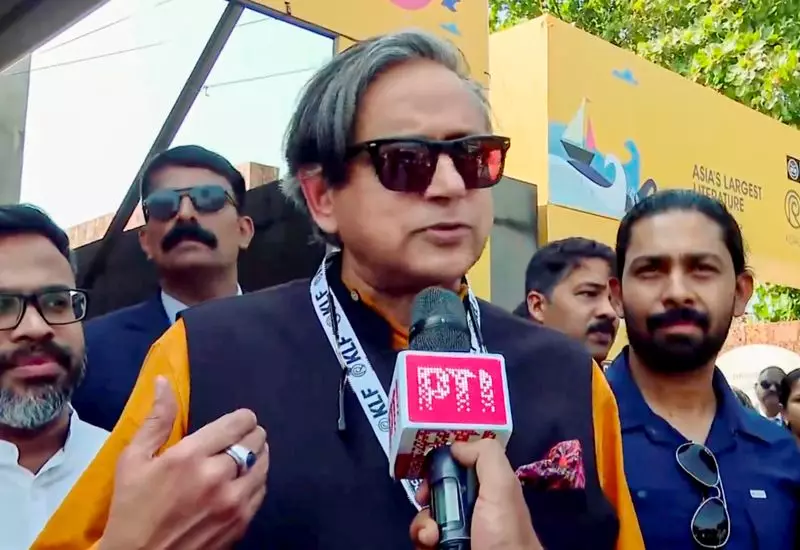
Shashi Tharoor Voices Concerns About Congress Party's Direction
Senior Congress leader and Member of Parliament Shashi Tharoor has openly acknowledged having "some issues" with his party, creating ripples within political circles and among party supporters. The statement comes at a crucial time for the Indian National Congress as it navigates complex political challenges and prepares for upcoming electoral battles.
Tharoor's Candid Admission
In a significant development that has captured national attention, Tharoor made his concerns public during recent interactions, though he stopped short of providing specific details about the nature of his disagreements. The three-time MP from Thiruvananthapuram emphasized that while he remains committed to the party's ideology and leadership, certain aspects of the Congress's functioning and strategic direction have prompted his reservations.
Political observers note that Tharoor's comments represent a rare instance of a senior Congress leader publicly acknowledging internal dissent without resorting to outright rebellion or resignation. His measured approach suggests a desire for constructive dialogue rather than confrontation, though the implications for party unity remain uncertain.

Context and Timing
The timing of Tharoor's remarks is particularly noteworthy, coming amid ongoing debates about the Congress party's electoral strategy, organizational structure, and response to contemporary political challenges. As one of the party's most prominent faces with substantial international recognition and intellectual credibility, Tharoor's concerns carry significant weight within political discourse.
Several factors may have contributed to this development:
- The Congress party's recent electoral performances and organizational challenges
- Debates about leadership styles and decision-making processes
- Questions about ideological positioning and communication strategies
- Internal discussions about coalition politics and alliance management
Potential Implications
Tharoor's public acknowledgment of differences with his party could have multiple consequences for both the leader and the Congress organization. On one hand, it demonstrates a level of transparency and intellectual honesty that might resonate with certain sections of the electorate. On the other hand, it risks exposing internal divisions that political opponents might exploit.
The situation presents a delicate balancing act for both Tharoor and the Congress leadership. How they manage this public airing of concerns will likely influence:
- Internal party dynamics and decision-making processes
- The Congress's public image and perception of unity
- Tharoor's own position and influence within the party hierarchy
- The broader narrative about opposition politics in India
Historical Precedents and Future Scenarios
This is not the first time a senior Congress leader has expressed reservations about party functioning, though such instances have typically led to either reconciliation or departure. Tharoor's approach appears more nuanced, suggesting he seeks internal reform rather than separation.
Political analysts will be watching closely to see whether this development leads to:
- Constructive internal discussions and potential course corrections
- Increased transparency in party decision-making
- Broader debates about the Congress's future direction
- Possible realignments within the opposition political space
As the situation evolves, both Tharoor's supporters and party loyalists await further clarification about the specific nature of his concerns and how the Congress leadership responds to this public expression of dissent.