

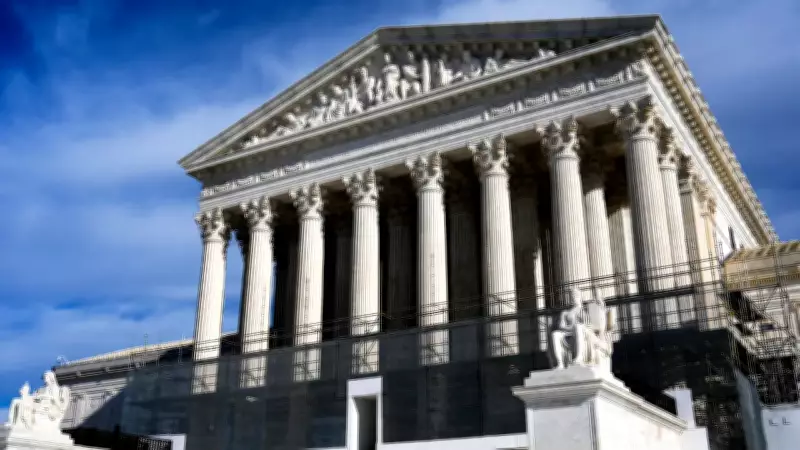
The Supreme Court sided Thursday with a Texas marijuana user who wants to legally own a gun, marking another in a series of firearm cases from a court that has expanded gun rights.
Unanimous Decision
In a unanimous ruling, the justices decided in favor of Ali Danial Hemani, who argued that a law prohibiting gun ownership for illegal drug users violates the Second Amendment. Hemani was not charged with any other crimes or accused of using the weapon while under the influence.
Justice Neil Gorsuch authored the opinion, stating that the ruling limits but does not eliminate the government's authority to confiscate guns from drug users.

Impact on Administration
The decision is a setback for President Donald Trump's Republican administration, which had defended the 1968 law despite opposing other gun restrictions. The same law was used in a case against Hunter Biden, who was convicted in Wilmington, Delaware, for purchasing a gun while addicted to cocaine in 2018. He later received a pardon from his father, then-President Joe Biden, a Democrat.
Legal Nuances
Gorsuch wrote that individuals addicted to drugs could still face prosecution after Thursday's decision. "We do not address efforts to ban addicts, or those presently intoxicated, from possessing a firearm," he noted. Prosecutors might still charge a marijuana user if they have evidence the person posed a danger.
Broader Context
This case is the latest in a series of firearm disputes reaching the Supreme Court since a landmark 2022 ruling expanded gun rights, triggering numerous challenges nationwide. Since then, the high court has upheld a law protecting domestic violence victims and strict regulations on ghost gun kits, but struck down a ban on bump stocks, an accessory enabling rapid fire. The justices are also considering another firearm case this term regarding strict regulations on carrying guns in Hawaii.
Cannabis Shifts
The Texas case unfolds amid significant changes in cannabis legality and use. More than half of U.S. states have broadly legalized marijuana, and it is widely used for health purposes. "Whatever one thinks of these developments, the federal government has not just tolerated them; it helped fuel them," Gorsuch wrote. "All of which leaves it awkwardly positioned to suggest that the millions of Americans who now regularly use marijuana are categorically and unusually dangerous."
Recreational use remains illegal at the federal level, even after the Trump administration reclassified medical marijuana as a less-dangerous drug in April.
Rare Charges
Standalone criminal charges against individuals solely for owning guns and using drugs are rare. The charge is more often filed against those also accused of other crimes.
Unusual Alliances
The case created unusual political alliances. The American Civil Liberties Union and the National Rifle Association both supported Hemani, along with cannabis legalization groups like NORML. On the opposing side were gun safety groups like Everytown, which typically oppose the Trump administration on Second Amendment issues.






