

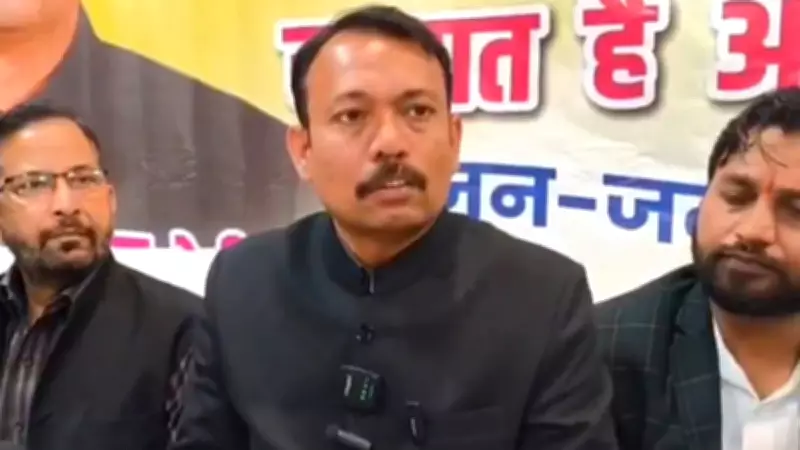
Suspended UP Officer Alankar Agnihotri Announces Formation of 'RAM' Political Outfit
Suspended Uttar Pradesh administrative officer Alankar Agnihotri has officially launched a new political organization named 'RAM' with the explicit aim of challenging the ruling Bharatiya Janata Party (BJP) in the state. The announcement was made during a significant public event held in Vrindavan, Mathura, on Monday evening, marking a bold entry into the competitive political landscape of Uttar Pradesh.
High-Profile Launch Event in Vrindavan
The formation of 'RAM' was unveiled at a gathering that drew considerable attention, with Agnihotri being prominently flanked by key supporters. Among them was Anand Ballabh Goswami, the president of the Rashtriya Brahmin Seva Sangh, whose presence underscores the potential social and community backing for this new political initiative. The event highlighted a strategic move to consolidate opposition forces against the BJP, leveraging local sentiments and organizational networks.
Background and Implications of Agnihotri's Political Move
Alankar Agnihotri, currently under suspension from his administrative duties, has taken a decisive step into active politics by establishing 'RAM'. This development comes at a time when Uttar Pradesh is gearing up for future electoral battles, and it signals a growing trend of individuals from bureaucratic backgrounds entering the political fray. The outfit's name, 'RAM', which resonates with cultural and religious symbolism in India, could be aimed at appealing to a broad voter base, particularly in a state known for its complex socio-political dynamics.

The launch event emphasized a clear anti-BJP stance, with Agnihotri articulating a vision to provide an alternative platform for governance and representation. The involvement of figures like Anand Ballabh Goswami suggests efforts to mobilize specific community groups, potentially influencing caste-based politics in Uttar Pradesh. As the political landscape evolves, 'RAM' is poised to become a notable player, challenging established parties and reshaping opposition strategies in one of India's most politically significant states.
This move by Agnihotri could have far-reaching consequences for Uttar Pradesh politics, as it introduces a new variable into an already competitive environment. Observers are closely watching how 'RAM' will build its organizational structure, garner public support, and position itself in upcoming elections. The formation of such outfits often reflects underlying discontent and the search for new leadership, making this a development worth monitoring in the coming months.






