Residents voice strong opinions on Chandigarh's vertical growth plan
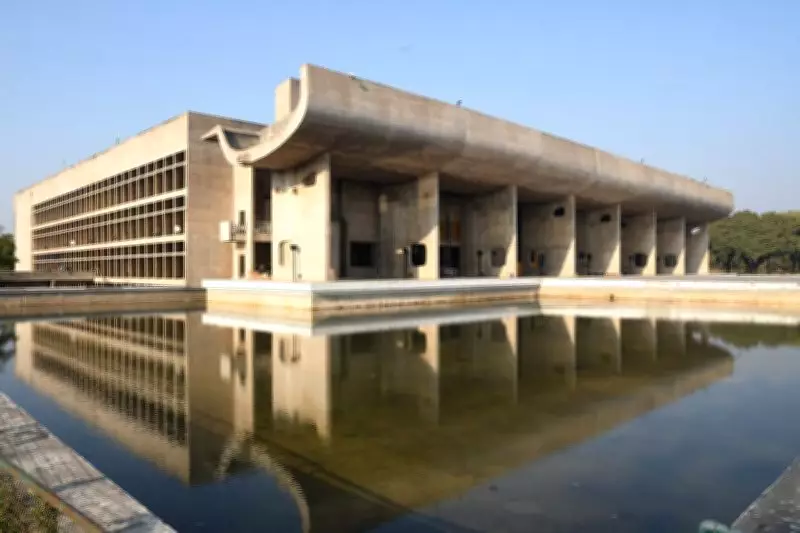
Chandigarh's proposal to amend its Master Plan 2031 to permit high-rise development has sparked a fierce debate among residents, with strong opinions on both sides. The city, originally designed by Le Corbusier for 500,000 people, now houses over 1.5 million residents, according to Vijay Katyal of Panchkula. The proposed changes include increasing Floor Area Ratio (FAR), allowing buildings up to 30 metres in specific zones, and boosting institutional FAR from 0.5 to 2.5, as noted by Sucha Singh Sagar. The Capitol Complex, spread across 100 acres at the city's northern edge, was designated a UNESCO World Heritage site in 2016, underscoring the architectural significance at stake.
Preservationists warn against losing low-rise charm
Many residents argue that high-rises would destroy Chandigarh's unique identity. Vineet Gandhi warned that boosting population density without upgrading foundational infrastructure would lead to crisis, emphasising the need for improved public transport and green spaces. Opinder Kaur Sekhon stated that amending the Master Plan would sacrifice Chandigarh's charm, drawing parallels to Delhi's loss of character with the decline of iconic spaces like the Gymkhana Club. NPS Sohal highlighted that the city's signature two-to-three-storey architecture allows unobstructed sky views, and high-rises should be restricted, particularly in the original thirty heritage sectors. Dr Neha Saini noted that Chandigarh is in a high-risk seismic zone, making tall buildings an inherent safety hazard, and cited the High Court's emphasis on preserving Le Corbusier's original vision of sun, space, and verdure.
Proponents argue vertical growth is essential for progress
Others contend that vertical development is necessary to accommodate population growth and housing demand. Ashok Kumar Goel of Panchkula stated that multi-storey developments are essential as modernisation reshapes the Tricity, and updating the Master Plan is vital for infrastructure. Col TBS Bedi (retd) of Mohali argued that vertical growth is a necessity due to limited land and a multiplying population, calling for an underground Metro, outer ring road, and expanded airport and railway networks. Vaibhav Goyal supported increasing building heights and FAR to meet housing demand and curb property prices, while limiting taller structures to commercial hubs and transit corridors. Lalit Bharadwaj of Panchkula noted the BJP's official stance to transfer the city to Punjab, as confirmed by national general secretary Tarun Chugh, and argued that urban planning must adapt to shifting dynamics.

Balanced approaches proposed to protect heritage while allowing growth
Several residents advocate for a middle ground. Ravinder Nath suggested permitting carefully planned high-rises in specific zones while safeguarding heritage sectors and greenery. Kirpal Singh recommended restricting smart high-rises to non-heritage areas, built only when infrastructure is ready. Gulshan of Mohali proposed protecting the historic core of Sectors 1 to 30 while permitting regulated vertical growth in outer sectors and IT corridors. Abhilasha Gupta suggested capping new construction at five floors with rooftop gardens to preserve heritage and eco-friendliness. Avinash Goyal proposed permitting one additional residential floor instead of high-rises, subject to safety and infrastructure norms, and directing new housing to CHB lands.

Infrastructure and environmental concerns dominate debate
Narinder Banwait pointed out that Mumbai's coastal climate keeps summer temperatures around 28-30°C, while Chandigarh faces extreme inland heat exceeding 40°C, making replication of Mumbai's multi-storey buildings unsuitable. NK Jhingan emphasised prioritising multi-storey parking, public transit, and non-motorised transport over unchecked vertical growth. Charu Malhotra of Mohali called for addressing the population explosion rather than compromising architectural charm. Wg Cdr JS Minhas (retd) of Mohali warned that high-rise models in the Tricity (Mohali, Panchkula, New Chandigarh, Zirakpur) threaten to turn Chandigarh into another congested Gurugram or Bengaluru, demanding transparent public consultation. Shubham Kathpalia of New Delhi stated that low-rise planning is the DNA of Chandigarh's identity, and true progress lies in balancing density, sustainability, and heritage.