

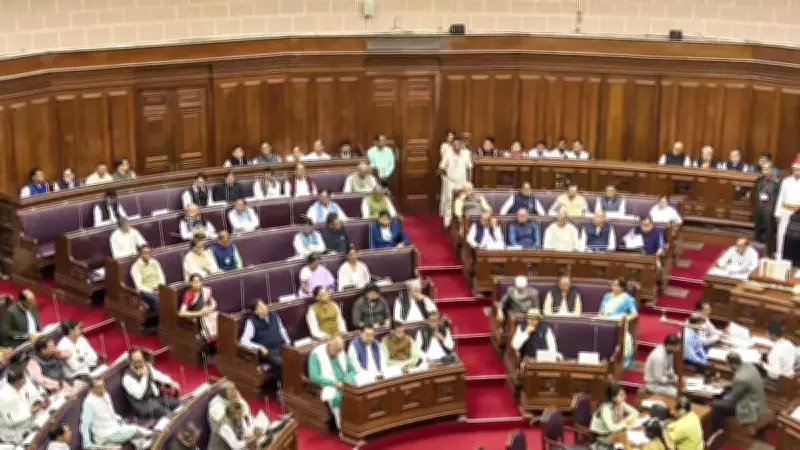
BJP Legislators Stage Dramatic Walkout in West Bengal Assembly
Kolkata, February 6, 2026: The West Bengal Legislative Assembly witnessed high drama and political turmoil as Bharatiya Janata Party (BJP) members staged a coordinated walkout on Thursday. This protest was triggered by a controversial remark made by the state's Finance Minister, Chandrima Bhattacharya, which BJP legislators interpreted as an insult directed at a prominent economist and, by extension, the people of Bengal.
The Provocative 'Humpty Dumpty' Comment
The flashpoint occurred during assembly proceedings when Finance Minister Chandrima Bhattacharya, while discussing economic policies, made a reference that BJP members construed as comparing an economist to the nursery rhyme character 'Humpty Dumpty'. The exact context and phrasing of the comment have become a subject of intense political debate, with the opposition BJP viewing it as derogatory and dismissive of intellectual contributions from Bengali economists.
Immediately following the remark, BJP MLAs voiced strong objections from the floor, leading to a heated exchange. Accusations of disrespect and belittlement flew across the assembly hall, disrupting normal legislative business.

Protest Escalates to Assembly Portico
Refusing to let the matter rest, the BJP legislators collectively walked out of the assembly chamber in protest. The demonstration then moved to the assembly portico, where it gained momentum and visibility.
The air was filled with resonant slogans chanted by the protesting MLAs and their supporters. Chants of 'shame, shame' echoed against the colonial-era architecture, directly targeting the Finance Minister and the ruling Trinamool Congress government. More significantly, slogans asserting 'we won't tolerate insult to Bengalis' highlighted how the BJP framed the issue not merely as a political disagreement but as a matter of regional pride and identity.
This framing seeks to tap into sentiments of Bengali sub-nationalism, positioning the BJP as defenders of the state's honor against perceived slights from the state government.
Political Implications and Reactions
The walkout and subsequent protest underscore the persistently acrimonious relationship between the ruling Trinamool Congress and the principal opposition BJP in West Bengal. Such incidents are indicative of the highly charged political atmosphere in the state, where assembly sessions frequently become arenas for intense partisan conflict rather than constructive debate.
While the Finance Minister's camp has yet to issue a detailed clarification or apology for the specific remark, the incident has provided the BJP with a potent political issue. It allows the party to rally its base and project itself as a vigilant opposition ready to confront the government on matters of dignity and respect.
Analysts suggest that beyond the immediate uproar, this event is likely to feature in the BJP's political narrative leading up to future electoral battles in the state, used to question the ruling party's regard for Bengali intellectuals and cultural esteem.
Broader Context of Indian Politics
This incident in Kolkata is not an isolated event but fits into a broader pattern of political theater and confrontational tactics seen in various state assemblies across India. Walkouts, slogan-shouting, and protests over remarks deemed offensive have become common parliamentary strategies used by opposition parties to draw attention, stall government business, and mobilize public opinion.
The specific invocation of Bengali pride also reflects the complex interplay between regional identity and national politics, a dynamic that is particularly salient in a culturally distinct state like West Bengal.
As of the latest reports, the BJP MLAs remained firm in their protest outside the assembly, demanding an unequivocal apology from the Finance Minister. The ruling party has condemned the walkout as a disruption tactic, setting the stage for a prolonged political standoff. The incident has dominated news cycles in the state, shifting focus away from legislative agenda to a controversy over words and their perceived meaning.






