14 Astonishing Scientific Facts That Will Surprise You
The world is brimming with remarkable scientific phenomena that often go unnoticed in our daily lives. From the microscopic details of our DNA to the vast expanses of outer space, these facts highlight the incredible complexity and wonder of the natural world. This article delves into 14 surprising scientific truths that will expand your understanding and appreciation of the universe around us.
The Elephant's Record Gestation Period
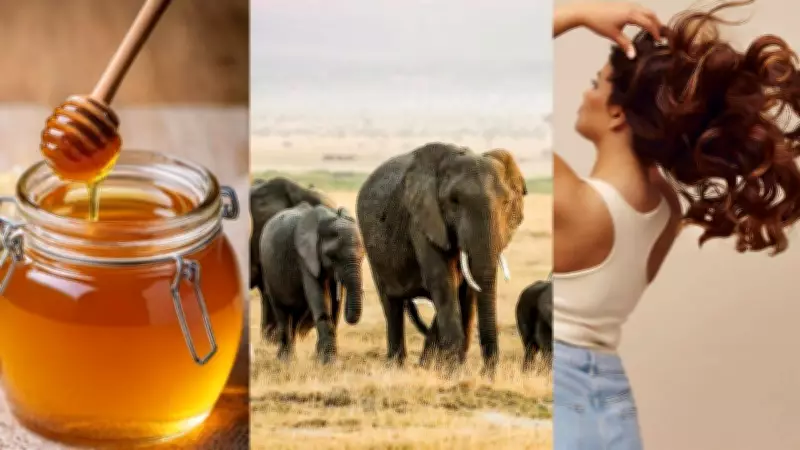
Elephants hold the record for the longest gestation period among all land mammals, lasting an impressive 22 months, which is nearly two years. This extended time is crucial for the calf to develop a fully functional brain and a body large enough to support immediate walking after birth, ensuring survival in the wild.
Alarming Extinction Rates Since the 1500s
Due to human activities, nearly 1000 animal species have gone extinct since the 1500s. Even more concerning is that many species may have disappeared before scientists could even identify them, leading to a global biodiversity crisis that threatens ecosystems worldwide.

Mosquitoes and Human Blood Volume
It would take approximately 1.1 million mosquitoes to completely drain all the blood from an average adult human body. With a blood volume of about 5 liters and each mosquito consuming only 5 microliters per bite, this staggering number illustrates the sheer volume of blood in our bodies and the scale of these tiny pests' impact.
Crocodiles' Unmatched Bite Force
Saltwater crocodiles possess the most powerful bite in the animal kingdom, with a recorded force of 3,700 pounds per square inch (psi). This is nearly four times stronger than a lion's bite, thanks to specialized jaw muscles that allow them to capture and hold onto large prey with incredible efficiency.
Astronauts' Height Increase in Space
Astronauts can grow up to three percent taller while in outer space due to the absence of Earth's gravity. Without gravitational compression, the cartilage between vertebrae expands, lengthening the spine. However, this effect is temporary, and astronauts return to their normal height upon re-entering Earth's gravitational field.
Brain Size vs. Efficiency in Genders
While men typically have larger brains, research indicates that women's brains are often more efficient. Studies using brain activity mapping show that female brains generally have stronger connections between hemispheres, facilitating faster communication and better performance in tasks involving memory, intuition, and social processing.
Lifetime Animal Consumption Statistics
On average, a meat-eating human consumes about 7,000 animals over their lifetime. This includes approximately 11 cows, 27 pigs, 2,400 chickens, 80 turkeys, and thousands of fish. These figures underscore the massive scale of livestock production required to support protein-heavy diets in today's food industry.
Brain's Information Processing Capacity
The human brain processes an astounding 11 million bits of information every second through sensory organs. However, the conscious mind can only handle about 40 to 50 bits at a time. This disparity highlights the brain's ability to filter out unnecessary data, preventing sensory overload and allowing focus on critical survival tasks.
Pluto vs. Russia Surface Area Comparison
Contrary to past debates, Pluto has a larger total surface area than Russia. Measurements from NASA's New Horizons spacecraft in 2015 revealed Pluto's surface area at 17.6 million square kilometers, compared to Russia's 17.1 million square kilometers, settling this astronomical comparison.
Honey's Indefinite Shelf Life
Honey is one of the few foods with an indefinite shelf life, remaining edible for thousands of years. Archaeologists have discovered honey in ancient Egyptian tombs over 3,000 years old that is still safe to eat. This longevity is due to honey's acidity, low moisture, high sugar concentration, and natural hydrogen peroxide, which inhibit bacterial growth.

Planets Fitting Between Earth and the Moon
All eight planets in our solar system, from Mercury to Neptune, can fit side by side in the gap between Earth and the Moon. With an average distance of 384,400 kilometers and a total planetary diameter of about 380,000 kilometers, this leaves approximately 4,400 kilometers of space, showcasing the vastness of our cosmic neighborhood.
Strength of Human Hair
A single strand of human hair can support about 100 grams. With around 120,000 hairs on the average scalp, the total strength can hold up to 12,000 kilograms, equivalent to the weight of two adult elephants. This remarkable strength comes from keratin, a protein with an excellent strength-to-weight ratio comparable to steel.
Muscle Count in the Human Body
The human body contains over 640 skeletal muscles, responsible for all voluntary movements such as walking and smiling. These muscles work in pairs, with one contracting while the other relaxes. Additionally, there are other muscle types for functions like digestion, but these 640 are the ones we consciously control during daily activities.
DNA Shared Between Humans and Bananas
Humans share about 60 percent of their DNA with bananas. This similarity stems from a common ancestor and the presence of "housekeeping" genes that perform basic life functions, such as energy conversion and DNA repair. These genetic instructions have remained largely unchanged for billions of years, linking all living organisms on Earth.