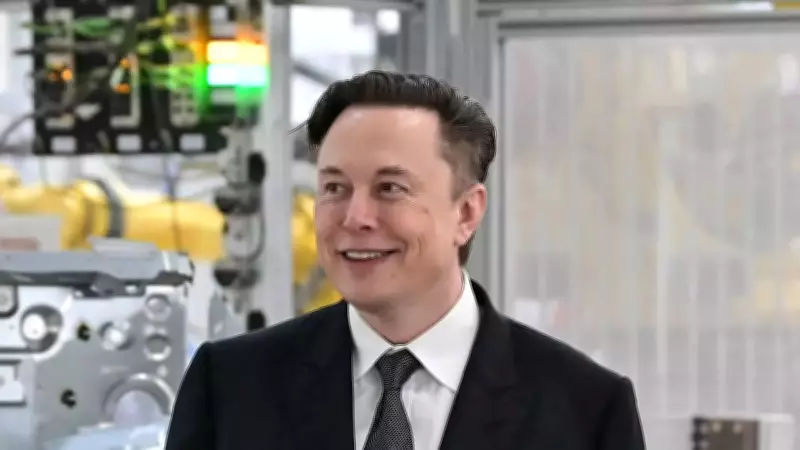
Elon Musk Calls on Artificial Intelligence to Tackle Chronic Back Pain
In a candid revelation about his personal health struggles, tech billionaire Elon Musk has issued a direct appeal to the artificial intelligence community. The Tesla and SpaceX CEO, currently recovering from his fifth neck surgery, expressed frustration with persistent back pain and challenged AI researchers to prioritize finding solutions for this widespread human complaint.
"Back Pain Sucks": Musk's Personal Plea to AI Developers
Speaking openly about his recovery process, Musk made an emotional appeal to the technology sector. "My back still hurts a little bit. I'm like, can AI please solve back pain? That would be a huge one. And I think it will," Musk stated emphatically. He went further to suggest a connection between aging and discomfort, noting, "Back pain sucks. I think that's maybe why people get grumpy when they get old — because of back pain."
The billionaire entrepreneur's comments highlight how even the most technologically advanced individuals face basic human health challenges. His call represents a significant shift in AI priorities, moving beyond traditional applications toward addressing fundamental quality-of-life issues affecting millions worldwide.

The Sumo Wrestling Incident That Started It All
Musk's chronic pain issues trace back to an unusual athletic encounter that has haunted him for years. In January, he revealed on X that his medical troubles originated from a collision with a sumo wrestler. "I ran full force at a ~350 lb Sumo wrestler in order to overcome the ~100 lb mass difference via velocity in the momentum exchange. I did knock him over, but smashed my neck in the process," Musk explained.
This single incident resulted in damage to his C5-C6 disc, requiring multiple surgical interventions just to address the initial injury. The billionaire's willingness to share these intimate medical details provides rare insight into how physical limitations can affect even the most powerful technology leaders.
Five Surgeries and Counting: Musk's Medical Journey
Elon Musk has undergone an extensive series of medical procedures to manage his pain. His most recent operation marked his fifth neck and back surgery, a journey he described with characteristic technical precision. "Oh man, this is a long story. I've had 5 neck/back operations," Musk wrote on X earlier this year.
He provided detailed medical explanations of his condition: "The third one, a C5-C6 fusion, actually worked in improving the pain from excruciating to livable. However, the nerve exiting the right facet is inflamed and the orifice through which it exits needed to be increased. Basically, my spine got reamed."
When users noticed his reduced activity on social media platforms, Musk clarified: "Recovering from neck surgery. Hurts a lot, but it was necessary." This transparency about his recovery process demonstrates how physical health challenges can impact even the most prolific public figures.
AI's Potential Role in Pain Management
Musk's appeal to artificial intelligence represents a growing recognition of technology's potential to address chronic health conditions. Back pain affects approximately 80% of adults at some point in their lives, making it one of humanity's most common medical complaints. The integration of AI could revolutionize pain management through:
- Advanced diagnostics using machine learning to identify pain sources more accurately
- Personalized treatment plans based on individual physiology and medical history
- Predictive analytics to prevent pain episodes before they occur
- Rehabilitation optimization through AI-guided physical therapy programs
- Drug development acceleration using computational models to identify new pain relief compounds
Musk's companies, including Neuralink which focuses on brain-computer interfaces, could potentially contribute to this research. His personal experience adds urgency to what many medical professionals have long advocated: more innovative approaches to chronic pain management.

The Broader Implications for Health Technology
Elon Musk's public discussion of his medical struggles represents a significant moment for health technology advocacy. When high-profile technology leaders share personal health challenges, it often accelerates research and investment in specific medical areas. Musk's influence could potentially:
- Direct more AI research funding toward pain management solutions
- Increase public awareness about chronic pain conditions
- Encourage collaboration between technology companies and medical researchers
- Destigmatize discussions about persistent health issues
- Inspire innovation in non-pharmaceutical pain management approaches
As artificial intelligence continues to advance across multiple sectors, Musk's personal appeal highlights the technology's potential to address fundamental human experiences like pain. His journey from sumo wrestling injury through five surgeries to advocating for AI solutions demonstrates how personal experience can shape technological priorities in unexpected ways.
The intersection of artificial intelligence and healthcare represents one of the most promising frontiers in modern medicine. With influential voices like Musk calling for specific applications, the development of AI-powered pain management solutions may receive increased attention from researchers, investors, and technology companies worldwide.