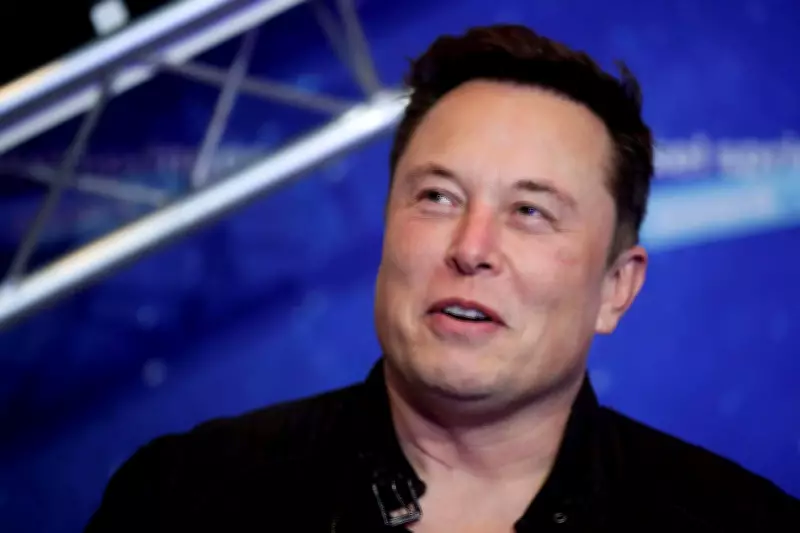
Elon Musk Reveals Ambitious Terafab Semiconductor Project in Austin, Texas
Tesla CEO Elon Musk has officially unveiled plans for the ambitious Terafab semiconductor project in Austin, Texas, as reported by Bloomberg. The facility will be a joint operation between Tesla and SpaceX, with additional support from Musk's AI company, xAI. This announcement marks a significant step in Musk's vision to address the growing demand for advanced chips in robotics, autonomous driving, and artificial intelligence.
The Terafab: A Gigantic Chip Fabrication Facility
Speaking at a downtown Austin event, Musk described the Terafab as an "advanced technology fab" that will initially focus on producing and testing various types of chips. He emphasized that the global semiconductor industry is moving too slowly to meet the anticipated needs of his companies. "We either build the Terafab or we don't have the chips, and we need the chips, so we build the Terafab," Musk stated, highlighting the urgency behind the project.
The Terafab is Tesla's plan to construct its own massive chip fabrication facility, which Musk has likened to a "gigafactory, but way bigger." It will primarily produce AI chips in the vast quantities required for Tesla's next-generation vehicles and robotics applications. At Tesla's Annual General Meeting last year, Musk explained, "Even when we extrapolate the best-case scenario for chip production from our suppliers, it's still not enough. I think we may have to do a Tesla terafab. It's like giga but way bigger. I can't see any other way to get to the volume of chips that we're looking for."

Focus on AI5 Chip and Future Satellite Vision
The Terafab is being designed around Tesla's fifth-generation AI chip, known as the AI5. This chip is engineered to power Tesla's autonomous driving systems, including its Full Self-Driving (FSD) software, and AI solutions for robotics. Musk has teased the AI5 chip on multiple occasions, underscoring its critical role in the company's technological advancements.
In addition to the chip plant, Musk revealed a speculative rendering of a "mini" AI data center satellite, part of a broader vision to launch millions of computing satellites into orbit. He suggested that future satellites could scale from 100 kilowatts to megawatt-level power, enabling complex AI workloads in space. Musk also reiterated his long-term vision of "amazing abundance," showcasing animations of satellites launched from the moon via a futuristic mass driver. "The future I want to see: I want us to live long enough to see the mass driver on the moon, because that's going to be incredibly epic," he said.
Challenges in Semiconductor Fabrication
Building semiconductor fabs is notoriously challenging, requiring tens of billions of dollars and years to become fully operational. Musk has previously promised 2-nanometer chip production, though specific timelines remain unclear. Tesla currently collaborates with suppliers such as Samsung, TSMC, and Micron, but Musk insists that their output cannot meet the growing demands of his companies.
The Terafab project faces significant hurdles, including:
- High capital investment requirements
- Extended timelines for development and operation
- Technological complexities in advanced chip manufacturing
- Competition from established semiconductor giants
Despite these challenges, Musk's determination to push forward with the Terafab underscores his commitment to securing a reliable chip supply for Tesla's future innovations in AI and robotics.