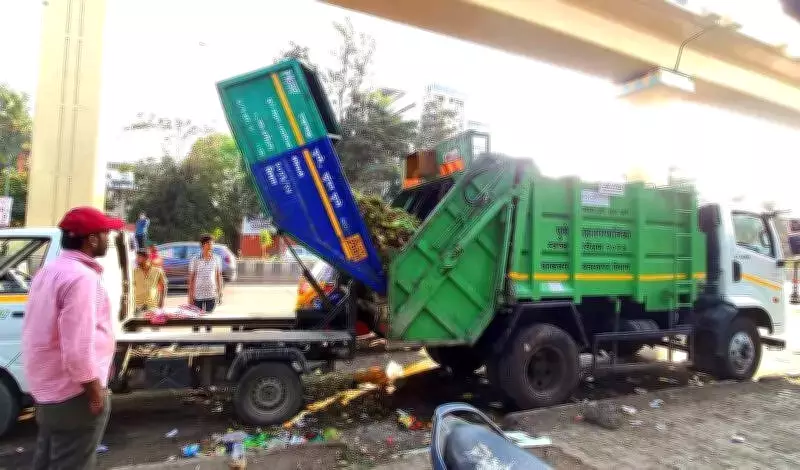
In an era marked by the growing integration of artificial intelligence into various systems, coupled with persistent complaints about administrative inefficiency, many residents of Pune believe that the Pune Municipal Corporation (PMC) can leverage cutting-edge technology to tackle civic problems. These issues range from waste collection and traffic congestion to enhanced security measures.
AI as a Catalyst for Civic Improvement
Pallavi Bhatevara, a businesswoman, emphasized that AI can act as a catalyst for addressing major civic challenges, particularly in laboratory and biomedical waste management. She noted that AI helps reduce environmental hazards and improve safety standards through data intelligence and process automation, ultimately contributing to an advanced public healthcare system.
Siya Padwal, a student, highlighted that AI can enhance urban functioning through effective garbage collection and personalized digital learning for students. She added that AI can help maintain water supply and public safety, but stressed the importance of responsible use without compromising personal data.

AI in Pollution Control and Traffic Management
Steve Ismail, a retired brigadier, pointed out several practical applications of AI. These include tracking and assessing the impact of pollution-causing industrial plants and vehicles, using AI-enabled robots for waste sorting, and implementing Automatic Number Plate Recognition (ANPR) to detect improperly parked vehicles. He also suggested installing AI-enabled LEDs on roadways to provide speed signals to vehicles, with notifications sent to police apps to impose fines of Rs 1,000 on rule-breakers. Additionally, AI can optimize traffic signal timings, particularly benefiting ambulances.
Aditya Saraf, a software engineer, described AI as a transformative tool that can turn urban chaos into order by acting as a real-time nervous system. He explained that AI replaces static schedules with data-driven management, improving sanitation through sensor-based waste collection and reducing traffic congestion through rule enforcement and adaptive signals. AI can also provide instant litter detection and noise monitoring, fostering a smart environment for proactive and efficient governance.
Monitoring Air Quality and Promoting Cleaner Habits
Ashwini Mathpati, a teacher, highlighted AI's role in monitoring the increasingly compromised air quality index (AQI). AI can warn citizens about rising pollution levels, encouraging them to use public transport and carpooling, thereby promoting a cleaner environment. She believes this technology has the potential to bring significant change to the civic landscape.
This article was compiled by Rohan Nakate.