

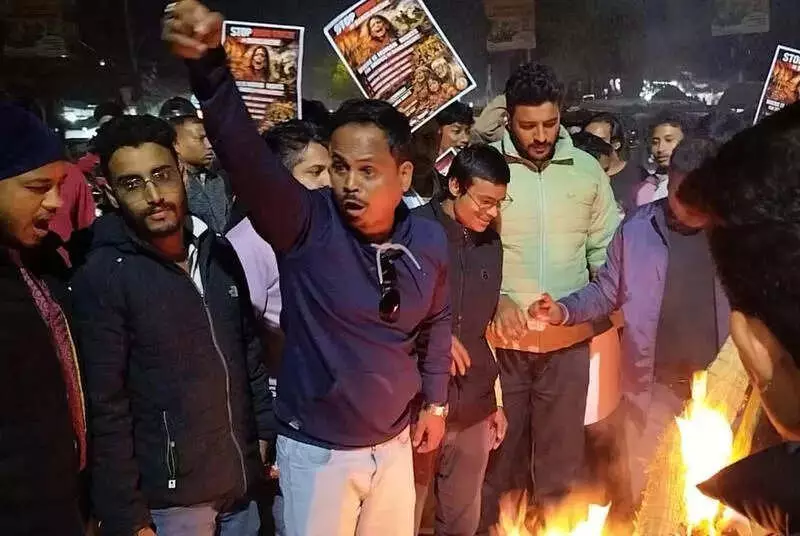
Protests have erupted across West Bengal and in parts of India, expressing outrage over the brutal lynching of a Hindu garment worker in neighbouring Bangladesh. The incident, involving a man named Dipu Das in Mymensingh, has sparked condemnation from Hindu organisations and civil society groups, who are demanding justice and highlighting the plight of minorities.
A Barbaric Attack Sparks Outrage
The victim, Dipu Das, was a worker at a garment factory in Tarakandi, Mymensingh, Bangladesh. According to reports from Hindu organisations in Bangladesh, the attack on Sunday was triggered by communal hatred and caste-based discrimination. A delegation from the Bangladesh Sammilita Sanatani Jagaran Jot visited Das's bereaved family on the same day.
Kushal Baran Chakraborty, a Sanskrit professor at Chittagong University and a spokesperson for the organisation, described the torture as "beyond imagination" and a rare occurrence in a civilised society. He explicitly stated that Das's lower caste Hindu identity was the primary trigger for the violence.

Dispute Over Promotion Alleged as Motive
Chakraborty provided further context, alleging that the attack stemmed from professional jealousy. Dipu Das had reportedly earned a promotion at the factory based on his merit. This development allegedly enraged other workers who could not accept a member of a minority community advancing. In a shocking claim, Chakraborty said Das was falsely accused of sharing objectionable content on social media, despite the fact that neither he nor his family owned a mobile phone.
The situation was so volatile that, according to the professor, there was resistance from other workers when attempts were made to bring Das's body back to his home, adding immense trauma to the family's grief.
Waves of Protest in West Bengal
The news of the lynching quickly crossed the border, igniting protests in the Indian state of West Bengal. On Saturday, the organisation Bangla Pokkho held a protest march in front of the Bangladesh Deputy High Commission's office in Kolkata. Protesters wearing black badges shouted slogans against communal forces active in Bangladesh.
Garga Chatterjee, the general secretary of Bangla Pokkho, made a strong statement, saying, "Dipu Das's brutal killing shows Bangladesh has turned into a violent nation." He went a step further by demanding that the Indian government snap all trade and diplomatic ties with Bangladesh in response to the incident.
The protests continued through the weekend. In Siliguri, activists of a pro-Hindu organisation staged demonstrations on both Saturday and Sunday to condemn the murder. In a symbolic act, protesters burnt an effigy of Nobel laureate Muhammad Yunus and called for a boycott of Bangladeshi goods. They also urged local hotels and nursing homes to deny services to Bangladeshi nationals.
Adding to the chorus of condemnation, the Bangiya Hindu Mahamancha also expressed its outrage. Its president, Vikramaditya Mandal, stressed that there have been repeated attacks on Hindus in Bangladesh since the ouster of Sheikh Hasina's government in August last year. The group demanded immediate justice and protection for the Hindu minority in the neighbouring country.
Mounting Tensions and Demands for Action
This tragic incident has sharply brought the issue of minority safety in Bangladesh back into focus, resonating strongly with the Hindu community in India, especially in border states like West Bengal. The protests reflect a deep-seated anxiety and anger over perceived targeted violence. The demands from various groups range from ensuring justice for Dipu Das's family to drastic diplomatic actions by the Indian government, indicating the potential for this event to strain cross-border communal harmony and bilateral relations.






