Canada's Historic Admission on Air India Kanishka Bombing
In a significant development, Canada has for the first time in 40 years officially acknowledged that Khalistani terrorists orchestrated the 1985 Air India Kanishka bombing. The announcement was made by Canadian Public Safety Minister Marco Mendicino on June 26, 2026, during a press conference in Ottawa. This admission marks a major shift in Canada's stance, which had long avoided directly attributing the attack to Khalistani extremists, often citing insufficient evidence or legal complexities.
Details of the Admission
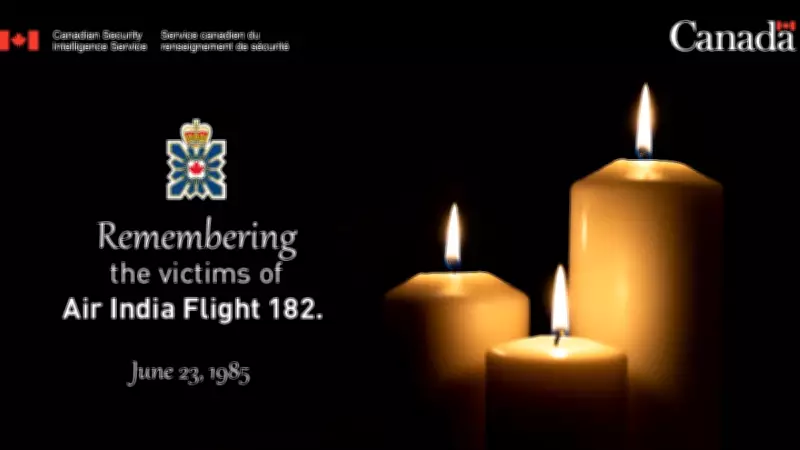
Minister Mendicino stated, "After a thorough review of declassified intelligence and ongoing investigations, our government now confirms that the Air India Flight 182 bombing was carried out by Khalistani terrorists. We extend our deepest condolences to the families of the 329 victims, many of whom were Canadian citizens." The bombing, which occurred on June 23, 1985, killed all 329 people on board, making it the deadliest terrorist attack in Canadian history. The flight was en route from Montreal to London when a bomb exploded off the coast of Ireland.
Impact on Canada-India Relations
This acknowledgment is expected to significantly impact bilateral relations between Canada and India. India has long criticized Canada for harboring Khalistani separatists and failing to take decisive action against them. In response to Canada's admission, Indian External Affairs Minister S. Jaishankar welcomed the move, saying, "This is a long-overdue recognition of the truth. We hope Canada will now take concrete steps to bring the perpetrators to justice and dismantle the networks supporting Khalistani terrorism." The admission could pave the way for enhanced counter-terrorism cooperation between the two nations.

Background of the Kanishka Bombing
The Air India Kanishka bombing was carried out by members of the Babbar Khalsa, a Khalistani terrorist group, in retaliation for the Indian government's operation against Sikh militants in the Golden Temple in 1984. Two bombs were planted; one exploded on Air India Flight 182, while the other was defused at Tokyo's Narita Airport. Despite extensive investigations, only one person, Inderjit Singh Reyat, was convicted in Canada for the bombing, serving a 30-year sentence. Many other suspects remain at large or have died.
Reactions and Future Steps
The admission has been met with mixed reactions. Families of the victims expressed relief but also frustration over the delay. Lata Pada, whose husband and two daughters died in the bombing, said, "This admission is bittersweet. It took 40 years for the truth to be acknowledged, but justice has yet to be fully served." Canadian Prime Minister Justin Trudeau has pledged to launch a new inquiry to identify all those responsible and to strengthen laws against terrorism financing. The move is also seen as an effort to repair strained ties with India, which had accused Canada of being a safe haven for Khalistani extremists.
Broader Implications
This development could have wider implications for Canada's domestic politics, given the presence of a vocal Khalistani diaspora in the country. Some Canadian politicians have expressed concerns about alienating the Sikh community, but others argue that acknowledging the truth is essential for national security and international credibility. The admission also puts pressure on other countries, such as the United Kingdom and Australia, to reassess their own stances on Khalistani activities within their borders.