Nationwide Protests Sweep US Against Trump Immigration Policies
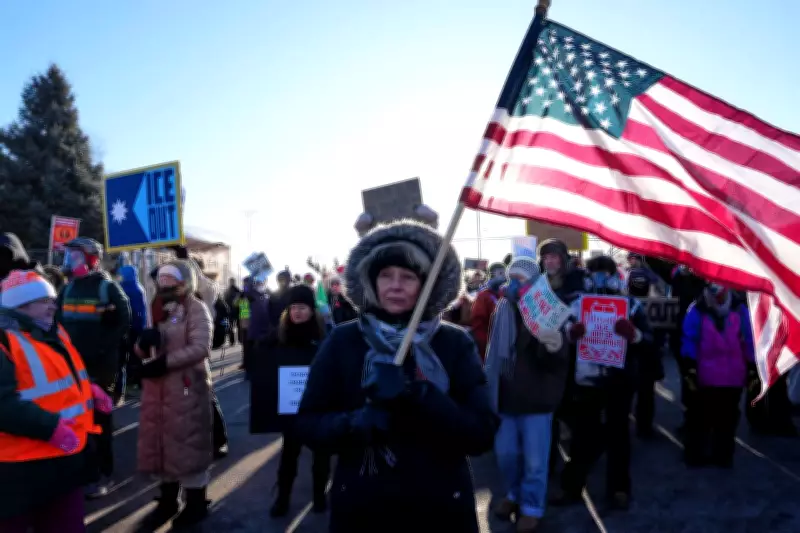
Widespread demonstrations erupted across the United States on Friday as protesters mobilized against the Trump administration's intensified immigration crackdown. Organizers called for a comprehensive nationwide strike under the rallying cry "no work, no school, no shopping", urging Americans to halt daily activities in solidarity with immigrant communities.
Fatal Shootings Fuel Public Outrage
The protests gained momentum following two recent fatal shootings linked to immigration enforcement operations. Public anger escalated after Alex Pretti, an intensive care nurse, was shot dead in Minneapolis after recording Border Patrol officers during an operation. This tragedy followed the January 7 killing of Renee Good, who was shot by an Immigration and Customs Enforcement officer while sitting in her vehicle.
Minneapolis Demonstrations Turn Confrontational
In Minneapolis, hundreds braved freezing temperatures to gather outside the Bishop Henry Whipple Federal Building. After emotional speeches by religious leaders, protesters marched toward a restricted area, directly confronting Department of Homeland Security agents with demands to leave the state. Police later issued warnings about potential arrests, causing many demonstrators to disperse while maintaining their vocal opposition.

Educational Institutions and Businesses Respond
The protest movement significantly impacted daily operations across multiple sectors:
- Schools in Arizona and Colorado preemptively cancelled classes anticipating low attendance
- Student walkouts occurred in Michigan and Georgia, with teenagers expressing determination to speak out against ICE actions
- Businesses demonstrated varied responses - some closed entirely for the day while others remained open but pledged to donate portions of their earnings to immigrant support organizations
Regional Demonstrations Spread Coast to Coast
Beyond major metropolitan areas, protests emerged in diverse locations including Portland, Maine, where demonstrators gathered outside a church. The Associated Press reported that the movement represented one of the largest coordinated responses to immigration policies in recent years, with participants expressing frustration over what they perceive as increasingly aggressive enforcement tactics.
The nationwide strike call represented an unprecedented escalation in protest tactics against immigration policies, combining traditional demonstrations with economic and educational disruption strategies. As tensions continue to mount between immigration authorities and activist groups, these events highlight the deepening polarization surrounding immigration enforcement in contemporary America.