Japan Raises Concerns Over Bangladesh-China Joint Statement
Japan is expected to demand an explanation from Bangladesh regarding a clause in the recent Bangladesh-China joint communique that opposes any attempts for a 'fascistic and militaristic revival,' a phrase Tokyo believes is aimed at its current regime, according to a Japanese diplomatic source. The clause was included during Prime Minister Tarique Rahman's visit to China from June 22 to 26, 2026.
Details of the Joint Communique
The joint statement issued after the visit stated: "Both sides agreed that it is essential to firmly uphold the outcomes of the victory of World War II and oppose any attempts for fascistic and militaristic revival. The two sides expressed support for the postwar international order established by the Cairo Declaration, the Potsdam Proclamation and other international legal documents including the U.N. Charter." This language, frequently used by Beijing to criticize Tokyo, has raised serious concerns in Japan.
Japan's Diplomatic Response
According to a Japanese source, Japan is likely to raise this issue and seek clarification in any future official discussions with Bangladesh. The source noted that Beijing dislikes the current regime in Tokyo and often employs the terminology of "fascistic and militaristic revival" to criticize it. The verbatim inclusion of this exact phrase in the joint communique has made the matter a serious concern for Japan.

Impact on Bangladesh's Neutral Foreign Policy
Bangladesh maintains a neutral foreign policy based on the principle of "Friendship to all, malice towards none." Being a close development and economic partner of both Japan and China, endorsing such highly charged rhetoric could accidentally complicate Bangladesh's diplomatic stance. It may invite awkward questions during official bilateral talks with Tokyo, potentially straining relations with a key development partner.
Background of Prime Minister Rahman's Visit
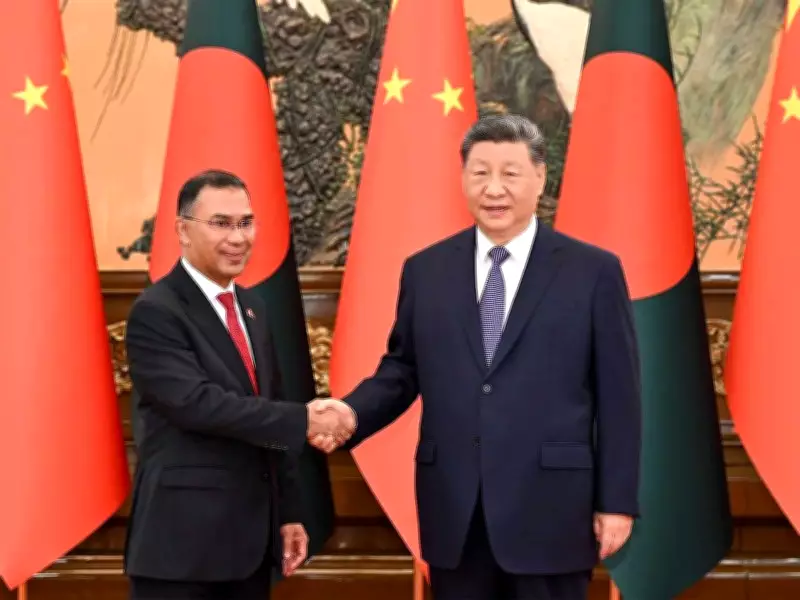
At the invitation of Chinese Premier Li Qiang, Bangladesh Prime Minister Tarique Rahman paid an official visit to China from June 22 to 26, 2026, and attended the 17th Annual Meeting of the New Champions 2026 (Summer Davos) in Dalian, China. During the visit, President Xi Jinping met with Prime Minister Rahman, and Premier Li Qiang held talks with him. Zhao Leji, Chairman of the Standing Committee of the National People's Congress, also had a meeting with the Bangladeshi leader. The two sides engaged in an in-depth exchange of views on bilateral relations and international and regional affairs of common interest, reaching a broad consensus.
Broader Implications
The development underscores the delicate balancing act for Bangladesh as it navigates its relationships with both China and Japan. While China is a major economic partner and investor, Japan is also a significant development partner and a key player in the region. The clause could test Dhaka's ability to maintain equidistance between the two Asian powers. Japan's expected demand for an explanation may lead to further diplomatic exchanges, with potential implications for regional dynamics and Bangladesh's foreign policy posture.