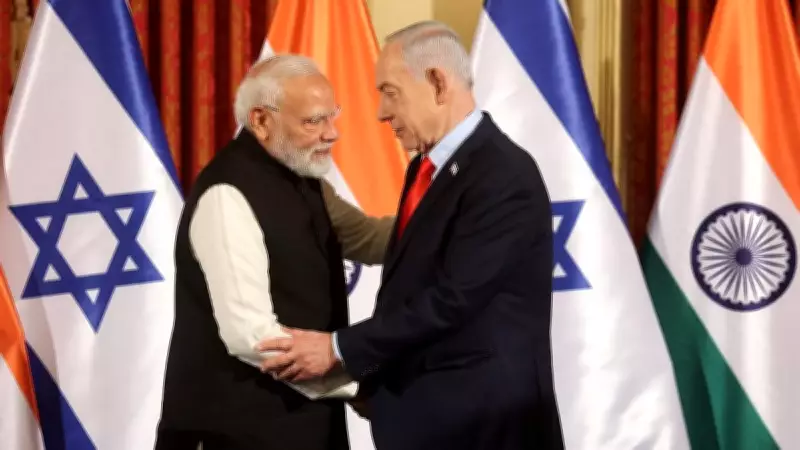
India's Diplomatic Balancing Act: PM Modi Addresses Hamas Attack and Shared Security Concerns
In a significant diplomatic statement, Prime Minister Narendra Modi has extended his condolences for the Israeli citizens who lost their lives during the horrific Hamas-led massacre on October 7, 2023. The Prime Minister's remarks underscore a critical moment in international relations, highlighting the complex geopolitical landscape where nations must navigate sensitive issues with precision and foresight.
A Statement of Solidarity and Strategic Alignment
Prime Minister Modi's message of sympathy was not merely a gesture of humanitarian concern but also a pointed acknowledgment of the shared security challenges that India and Israel have confronted over many years. By explicitly linking the October 7 attack to the broader threat of terrorism, the Indian leader reinforced the bilateral understanding between the two nations regarding counter-terrorism efforts. This alignment is rooted in historical contexts where both countries have faced extremist violence, making the statement a reaffirmation of mutual strategic interests.
The Perils of Short-Term Diplomatic Calculations
The timing and content of PM Modi's comments bring to light the inherent risks associated with short-term diplomatic maneuvers. In global politics, leaders often face pressure to make immediate statements that can have long-lasting repercussions. India's position on the Israel-Hamas conflict requires a delicate balance, considering its historical ties with Palestine and its growing strategic partnership with Israel. This balancing act is fraught with potential pitfalls, as any perceived misstep could alienate key allies or complicate regional dynamics.

Experts suggest that such diplomatic communications must be carefully crafted to avoid unintended consequences. The Prime Minister's emphasis on terrorism as a common enemy serves to:
- Strengthen bilateral cooperation on security matters.
- Signal India's stance without overtly taking sides in the broader Middle East conflict.
- Highlight the universal nature of the terrorism threat, which resonates with India's own experiences.
Broader Implications for India's Foreign Policy
This incident illustrates the ongoing evolution of India's foreign policy under Prime Minister Modi's leadership. The government has consistently sought to position India as a key player on the world stage, engaging with multiple stakeholders while safeguarding national interests. The statement regarding the Hamas attack reflects a pragmatic approach, where India maintains its principled opposition to terrorism while navigating complex international relationships.
Looking ahead, the diplomatic tightrope walk will likely continue as global events unfold. India's ability to manage these nuances will be crucial in shaping its role in international affairs, particularly in regions like the Middle East where historical and contemporary issues intersect. The Prime Minister's condolences, therefore, are more than a mere expression of sympathy; they are a strategic communication aimed at reinforcing India's foreign policy objectives in a volatile world.