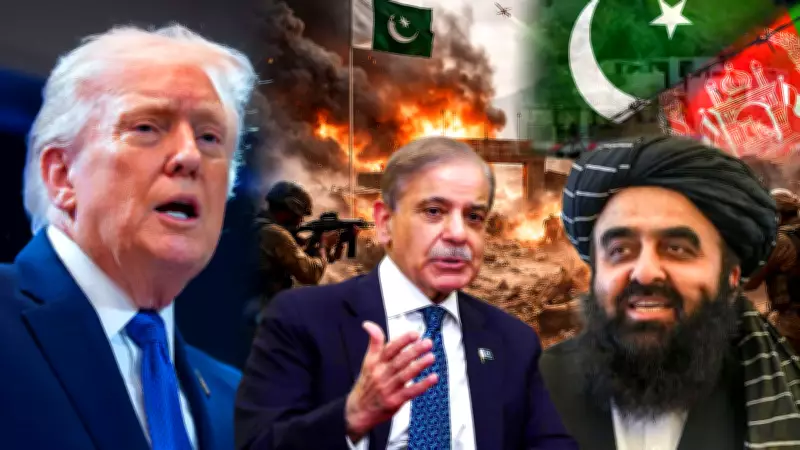
Trump Praises Pakistani Leadership Amid Escalating Regional Conflict
In a significant diplomatic development during heightened Pakistan-Afghanistan hostilities, former US President Donald Trump has publicly praised Pakistani leaders Shehbaz Sharif and Asim Munir, describing them as "great" leaders while maintaining a position of non-intervention in the ongoing conflict. This endorsement comes as Pakistan continues military operations along its western frontier, with Kabul reporting substantial counter losses in response to what Islamabad describes as sweeping airstrikes.
Geopolitical Dimensions Intensify as Allegations Surface
The regional conflict has taken on complex geopolitical dimensions with Pakistan reviving longstanding allegations of Indian involvement in cross-border terrorism activities. These claims have been met with firm rejection from New Delhi and outright dismissal by the Taliban government in Afghanistan, creating a triangular diplomatic standoff that extends beyond immediate military engagements.
For India, the optics of receiving what appears to be implicit US endorsement through Trump's praise of Pakistani leadership during this period of regional instability present significant diplomatic challenges. The situation has evolved from purely military confrontations to encompass broader geopolitical narratives that could reshape regional alliances and power dynamics.

Diplomatic Narratives Shift as Tensions Mount
With tensions continuing to rise along Pakistan's western frontier, diplomatic narratives are undergoing substantial shifts. The conflict has transformed from localized military engagements to a broader geopolitical contest involving multiple regional powers with competing interests. The Taliban government's dismissal of Pakistan's allegations against India adds another layer of complexity to an already volatile situation.
The emerging diplomatic landscape suggests that traditional alliances may be tested as various stakeholders navigate the competing pressures of military necessity, diplomatic positioning, and regional stability concerns. Trump's decision to praise Pakistani leadership while avoiding direct intervention represents a calculated diplomatic approach that acknowledges the conflict's complexity without committing to specific mediation efforts.
Regional Implications and Future Trajectory
As the situation continues to develop, several key implications emerge for regional stability:
- The conflict's expansion beyond military dimensions into geopolitical positioning
- Potential realignment of regional alliances based on evolving diplomatic stances
- Increased pressure on India to navigate complex diplomatic waters amid competing claims
- The challenge of maintaining regional stability while addressing security concerns
The coming weeks will likely reveal whether Trump's praise of Pakistani leadership represents a temporary diplomatic gesture or signals broader shifts in regional engagement strategies. With multiple narratives competing for dominance and military tensions showing no immediate signs of abating, the Pakistan-Afghanistan conflict has firmly established itself as a defining geopolitical challenge for South Asia.