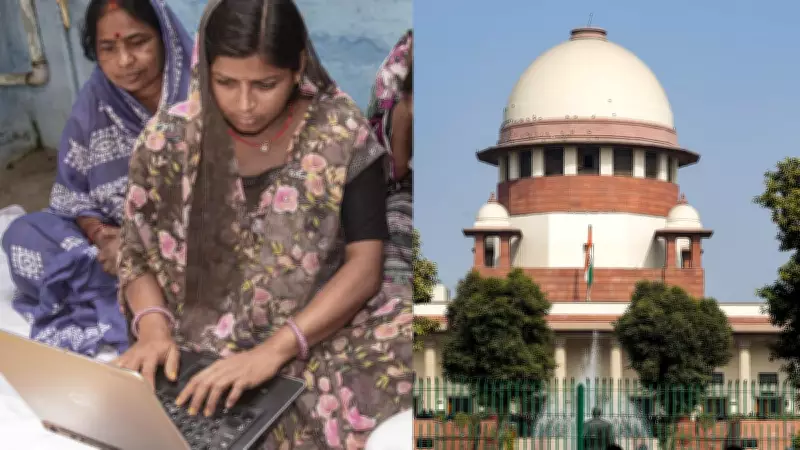
The Supreme Court of India on Tuesday dismissed a Public Interest Litigation (PIL) that challenged the inclusion of caste enumeration in the upcoming Census. A bench comprising Chief Justice of India D.Y. Chandrachud and Justices J.B. Pardiwala and Manoj Misra declined to entertain the petition, terming it a matter of government policy.
Court’s Stance on Caste Enumeration
The bench observed that the decision to enumerate castes during the Census falls within the domain of the executive and legislature. The court noted that it cannot interfere with policy decisions unless they violate fundamental rights. The PIL had argued that caste enumeration would perpetuate caste divisions and violate the right to equality. However, the court remained unconvinced, stating that the government has the authority to collect data for welfare schemes and affirmative action policies.
Background of the Case
The PIL was filed by an activist who contended that the Census should not include caste details, as it could lead to social fragmentation. The petitioner claimed that the Census Act of 1948 does not mandate caste enumeration, and such a move would be unconstitutional. The government, on the other hand, defended the move, stating that caste data is essential for formulating policies for backward classes and ensuring effective implementation of reservation quotas.

Implications of the Verdict
With the dismissal of the PIL, the path is cleared for the government to proceed with caste enumeration in the upcoming Census. This decision is seen as a significant step towards collecting comprehensive data on caste demographics, which has been a long-standing demand from various political and social groups. Proponents argue that accurate caste data will help in targeted welfare programs and address historical inequalities.
The Supreme Court’s ruling underscores the separation of powers between the judiciary and the executive, with the court refraining from dictating policy choices. The government now has the green light to decide the modalities of caste enumeration, including whether to conduct a separate caste census or include it as part of the general Census.
Reactions and Future Outlook
Reactions to the verdict have been mixed. Supporters of caste enumeration view it as a victory for social justice, while critics express concerns about potential misuse of data and social discord. The government has assured that the data will be used solely for developmental purposes and will be kept confidential. The Census, which was delayed due to the COVID-19 pandemic, is expected to commence soon, and the inclusion of caste enumeration will be a key feature.