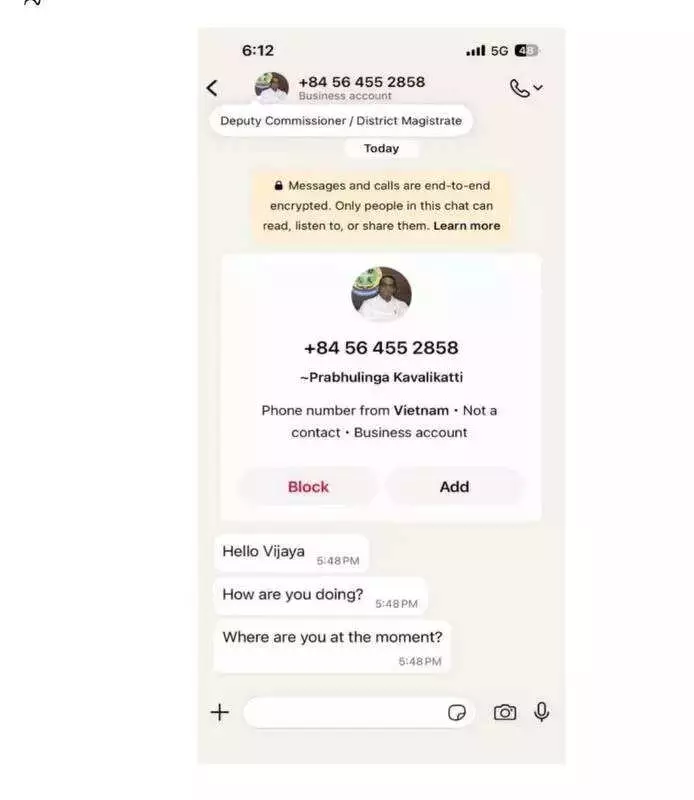
Shivamogga Deputy Commissioner Faces Cyber Fraud Attempt
Cyber criminals have targeted Shivamogga Deputy Commissioner Prabhuling Kavalikatti in a sophisticated scam. The fraudsters opened a WhatsApp Business account using his name and photograph. They employed a foreign phone number to send fake messages to government officials and members of the public.
Scammers Ask for Money and Favors
The messages allegedly requested money and various favors from recipients. The scammers used social engineering tactics to make the communications appear genuine. They might claim an emergency or an official matter to trick people into responding.
Deputy Commissioner Kavalikatti issued a clear statement to warn everyone. "I want to clarify that cyber fraudsters are using my name and photograph to scam people," he stated. "Such messages are fake, and I urge everyone to ignore them. If you receive any fake messages from this number, please block it and report it."

Officials Receive Fake Messages
Kavalikatti confirmed that some officers have already received these fraudulent messages. They have complained to him about the situation. However, the deputy commissioner has not filed a formal police complaint at this time.
Kavalikatti took charge as Shivamogga Deputy Commissioner just thirteen days ago. The timing of this scam attempt highlights how quickly cyber criminals can act against new appointees.
Public Urged to Stay Vigilant
The deputy commissioner has requested both the public and government officials to remain extremely vigilant. He emphasized that people should not respond to any suspicious messages claiming to be from him.
Here is what you should do if you receive such messages:
- Ignore the message completely
- Block the phone number immediately
- Report the incident to authorities
- Do not send any money or personal information
Cyber security experts note that such scams are becoming increasingly common across India. Criminals often target prominent officials to gain credibility for their fraudulent activities. They exploit people's trust in authority figures to execute their schemes.
The use of foreign phone numbers makes these scams particularly challenging to trace and shut down quickly. Authorities recommend always verifying unusual requests through official channels before taking any action.
This incident serves as a reminder for everyone to practice caution when receiving unexpected messages, even if they appear to come from trusted sources. Digital verification has become essential in today's connected world.