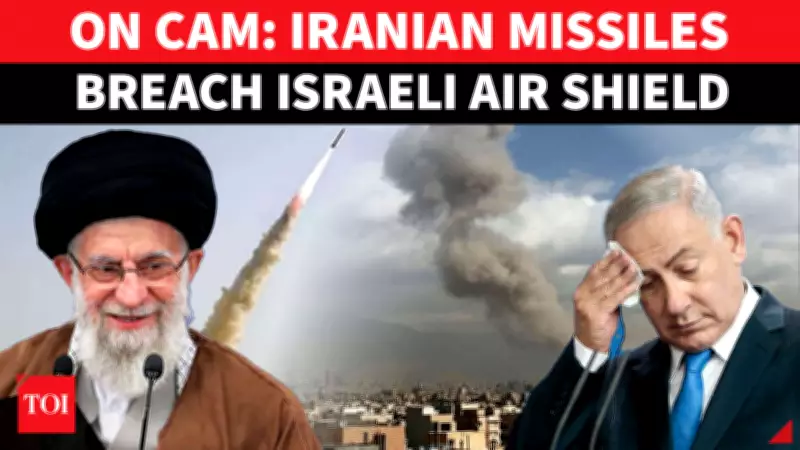
Iran Launches Major Missile Barrage Against Israel, Straining Defenses
In a significant escalation of direct hostilities, Iran fired around 35 ballistic missiles toward Israel in a concentrated wave, marking one of the most intense attacks in recent years. The assault, which occurred on February 28, 2026, has heightened fears of a broader regional conflict as tensions between the two nations reach a critical point.
Israeli Air Defense Systems Tested Amid Sustained Barrage
Israel's multi-layered air defense network, including the Iron Dome and Arrow systems, was put to the test as it intercepted several of the incoming projectiles. However, officials confirmed that a number of missiles managed to breach the defensive shield, resulting in debris and fragments landing across multiple areas in northern and central Israel. Israeli police reported numerous impact sites, though initial assessments indicate no direct hits on major urban centers or critical infrastructure.
The sustained nature of the barrage is stretching Israel's defensive capabilities to their limits, raising concerns about the system's capacity to handle potential follow-up waves. Military analysts note that such a large-scale, coordinated attack represents a strategic shift in Iran's approach, moving from proxy warfare to more direct confrontation.

Casualties and Emergency Response
Medics on the ground reported that at least one man sustained light injuries in northern Israel, likely from falling debris or shrapnel. Additionally, several individuals were treated for anxiety-related symptoms and minor injuries sustained while seeking shelter during the attack. Emergency services were deployed across affected regions, with hospitals placed on high alert to handle any influx of casualties.
"The psychological impact of such an attack cannot be underestimated," stated a senior health official. "We are seeing people experiencing severe stress and trauma, which requires immediate medical and psychological support."
Regional and International Implications
This missile barrage comes amid already heightened tensions in the Middle East, with recent conflicts involving Gulf states and American bases. The direct strike on Israeli territory signals a dangerous new phase in the long-standing shadow war between Iran and Israel, which has previously involved cyberattacks, assassinations, and strikes through proxy groups.
Israeli officials have issued warnings that additional missile waves could follow in the coming hours, urging citizens to remain near protected spaces and follow civil defense instructions. The government is reportedly convening emergency security meetings to assess the situation and plan potential responses.
International observers are closely monitoring the developments, concerned that further escalation could draw in other regional powers and destabilize an already volatile area. The attack underscores the fragile security landscape in the Middle East and the ongoing risks of miscalculation that could lead to wider conflict.