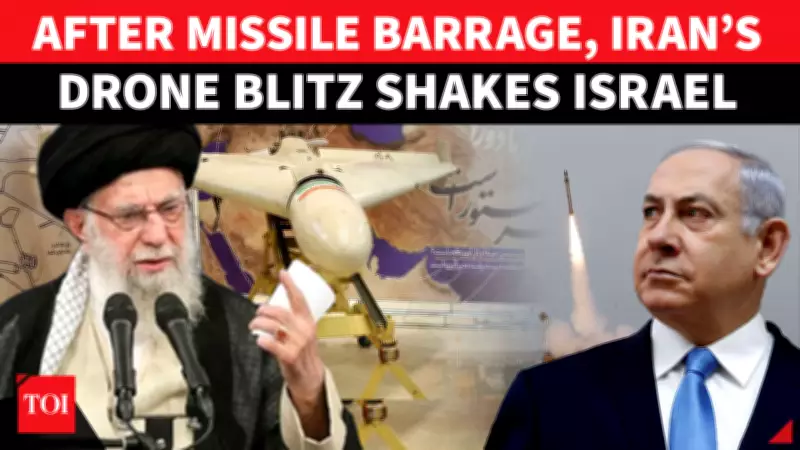
Iran Unleashes Major Drone Assault on Israel Following Coordinated Missile Barrage
In a dramatic escalation of hostilities, Iran has launched what it describes as "dozens of attack drones" toward Israel, characterizing this as the first extensive drone offensive in the ongoing conflict. The attack follows what appears to be coordinated missile salvos, signaling a dangerous widening of Middle East tensions that now involve multiple fronts and have put Gulf states on high alert.
Details of the Drone Offensive
Iranian military officials have confirmed that the drones are targeting specific Israeli interests and will require several hours to reach their intended destinations. This calculated timing suggests a strategic approach designed to test and overwhelm regional defense systems. The announcement marks a significant shift in Iran's military tactics, moving beyond proxy warfare to direct aerial assaults against Israeli territory.
Regional air defense networks have been immediately activated in response to the threat. Previous similar attacks have largely been intercepted before reaching Israeli airspace, but the scale and coordination of this latest offensive present unprecedented challenges for defense systems across the region.

Simultaneous Actions in Northern Iraq
Meanwhile, in a related development over Erbil in northern Iraq, U.S.-led coalition forces successfully intercepted and shot down several missiles and explosive drones, according to statements from Kurdish security officials. This action demonstrates the multi-front nature of the current conflict, with American forces actively engaged in defensive operations alongside regional partners.
The simultaneous attacks across different theaters highlight the coordinated nature of Iran's military strategy and the complex web of alliances and confrontations currently defining Middle Eastern geopolitics.
Regional Implications and Escalation Risks
The unfolding drone campaign represents a dangerous expansion of the Iran-Israel confrontation, with several Gulf states now on alert and preparing for potential spillover effects. The situation has created a volatile security environment where miscalculation or failed interception could lead to significant casualties and further escalation.
Key aspects of this developing situation include:- The unprecedented scale of Iran's direct drone offensive against Israel
- The activation of regional air defense systems across multiple countries
- U.S.-led coalition involvement in intercepting threats in northern Iraq
- The potential for the conflict to draw in additional regional actors
- The strategic timing and coordination evident in the attacks
As the drones continue toward their targets over the coming hours, military analysts are closely monitoring Israel's response capabilities and the effectiveness of regional defense networks. The outcome of this offensive could significantly influence the trajectory of Middle East conflicts and determine whether further escalation or diplomatic intervention becomes more likely.