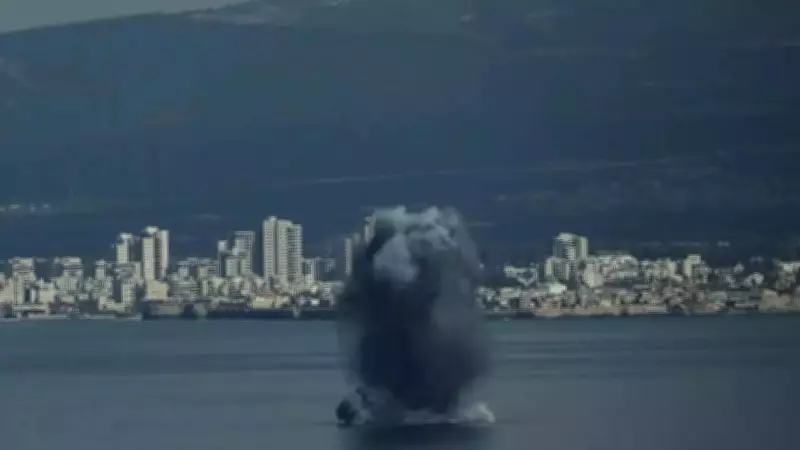
Israel and United States Launch Joint Preemptive Military Strike Against Iran
In a major escalation of regional tensions, Israel and the United States have executed a coordinated preemptive military operation against Iran. The joint strikes targeted Iranian military installations and nuclear-linked facilities across multiple cities, including Tehran, Isfahan, and Shiraz. This operation marks a significant increase in direct US military involvement in the ongoing conflict over Iran's nuclear program and internal political unrest.
Operation Details and Military Systems Deployed
The military campaign, codenamed Operation Roaring Lion by Israel and Operation Epic Fury by the United States, utilized advanced air, naval, and missile systems. US and Israeli forces deployed long-range cruise missiles, stealth aircraft, precision-guided munitions, and armed drones in a sophisticated multi-domain attack.
Key weapons systems employed by the US-Israeli coalition included:

- Tomahawk cruise missiles launched from warships and submarines, capable of striking targets over 1,600 kilometers away while flying at extremely low altitudes to evade radar detection
- Israel's custom F-35I "Adir" stealth fighters, featuring indigenous software and hardware integration for enhanced penetration of defended airspace
- F-15I Ra'am strike fighters developed specifically for Israel's deep-strike capabilities
- Stand-off cruise missiles including the Delilah (with loitering capability) and Rampage (optimized for hardened targets)
- Precision-guided munitions such as SPICE kits and Joint Direct Attack Munition systems
- GBU-28 bunker-buster bombs designed to destroy deeply buried facilities
- Long-endurance unmanned systems including Heron and Eitan drones for surveillance and strike missions
Iran's Immediate Retaliation and Regional Escalation
Iran responded swiftly with comprehensive missile and drone barrages directed toward Israel, followed by coordinated strikes on US military facilities across the Middle East. The Iranian retaliation, conducted under Operation 'Truthful Promise 4,' targeted American bases in Bahrain, Kuwait, and Qatar, demonstrating Tehran's capability to widen the conflict beyond the principal adversaries.
Iranian weapon systems used in the counterattack included:
- Shahab-3 medium-range ballistic missiles derived from North Korean technology, capable of striking all of Israel
- Emad precision-guided ballistic missiles with terminal guidance for improved accuracy
- Ghadr medium-range missiles offering extended range and enhanced mobility
The Iranian strikes resulted in explosions reported in Abu Dhabi and Doha, with missiles hitting the US Navy headquarters in Bahrain. The conflict has now expanded to involve multiple regional players, creating a complex security situation across the Middle East.
Background and Political Context
This military confrontation had been widely anticipated following US President Donald Trump's order for the largest American military deployment to the Middle East in years. The operation comes amid heightened tensions over Iran's nuclear program and internal political unrest within the Islamic Republic.
Notably, lawmakers have questioned why President Trump has not addressed the American public or Congress to explain the necessity for military action. The lack of formal declaration and public explanation has raised constitutional and political questions about the authorization for this significant military engagement.
The joint operation represents a dramatic shift in US policy toward direct military confrontation with Iran, moving beyond previous strategies of sanctions and diplomatic pressure. For Israel, the operation demonstrates its willingness to take decisive action against perceived existential threats from Iranian nuclear capabilities.
The regional implications of this conflict are profound, with potential consequences for global oil markets, international shipping routes through the Strait of Hormuz, and the broader balance of power in the Middle East. The involvement of multiple Gulf states as both targets and potential participants adds layers of complexity to an already volatile situation.