

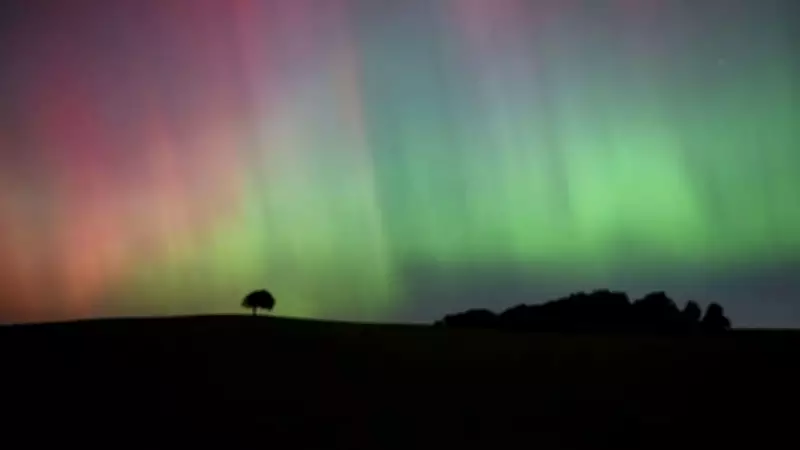
UK Braces for Another Northern Lights Spectacle Tonight
The United Kingdom could witness another breathtaking celestial event tonight, as forecasters predict the Northern Lights may once again grace large portions of the country. Following a vivid and widespread display on Friday night, meteorological experts indicate that atmospheric conditions remain highly favorable for a repeat performance, with the possibility of visibility extending even to southern regions that rarely experience such phenomena.
Optimal Viewing Times and Geographic Locations
According to detailed auroral forecasts, the aurora borealis is most likely to be visible between 10 PM and 2 AM local time. The strongest probabilities for clear sightings are concentrated across Scotland, Northern Ireland, and the northern areas of England and Wales. However, if elevated solar activity persists, the luminous display could extend much further south, representing a rare opportunity for residents in typically unaffected areas.
On Friday, enthusiastic skywatchers reported successful sightings as far south as Norfolk, fueling optimism that tonight's event could achieve similar geographic reach. This potential expansion highlights the unusual intensity of current solar conditions.

The Scientific Drivers Behind the Dazzling Light Show
The spectacular phenomenon is being propelled by a significant surge in solar activity. A Coronal Mass Ejection (CME), which is an enormous burst of charged particles ejected from the Sun, reached Earth's atmosphere over the weekend, triggering powerful geomagnetic storms.
When these high-energy particles interact with Earth's magnetic field and collide with gases in the upper atmosphere, they produce the characteristic glowing colors of the aurora. Oxygen molecules typically emit vibrant green hues, while nitrogen can generate stunning reds, pinks, and purples. Forecasters note that multiple waves of solar activity, combined with fast-moving solar winds, continue to impact our planet, maintaining conditions that are primed for auroral displays.
Equinox Effect Enhances Visibility Potential
The timing of this event is particularly fortuitous. The recent spring equinox increases the likelihood of more intense and visible auroras due to a specific alignment between Earth's magnetic field and incoming solar winds. This alignment, a well-documented phenomenon, serves to amplify geomagnetic activity, potentially making the lights brighter and more widespread.
Potential Obstacles: Cloud Cover Considerations
While solar and atmospheric conditions in parts of the UK may be ideal, variable cloud cover could obstruct views in certain regions, particularly across northern areas. Clear, unobstructed skies will significantly improve the chances of spotting the ethereal lights. Observers are advised to monitor local weather reports for real-time updates on cloud conditions.
Practical Tips for Aurora Chasers
For the best possible viewing experience:
- Seek out a dark location far removed from the light pollution of cities and towns.
- Face northwards and scan the horizon patiently.
- Utilize a smartphone or camera, as these devices can often capture colors and details that are not immediately visible to the naked eye.
Understanding the Northern Lights Phenomenon
The Northern Lights, scientifically known as the aurora borealis, are a natural light display caused by charged solar particles colliding with gases in Earth's atmosphere. These energetic collisions occur at high altitudes, typically between 80 and 250 kilometers above the planet's surface, creating shimmering, undulating waves of color across the night sky.
Though typically confined to regions near the Arctic Circle, intense solar storms can push the auroral oval much further south, offering rare and magnificent viewing opportunities in mid-latitude locations like the United Kingdom.

